
-
Journal Name: Journal of Techniques
-
ISSN: 2708-8383 (Online)
-
Publisher : Middle Technical University
-
Frequency : Quarterly
-
DOI : 10.51173/3/jt
-
Acceptance Rate : 27%
-
Journal Template : (Download)

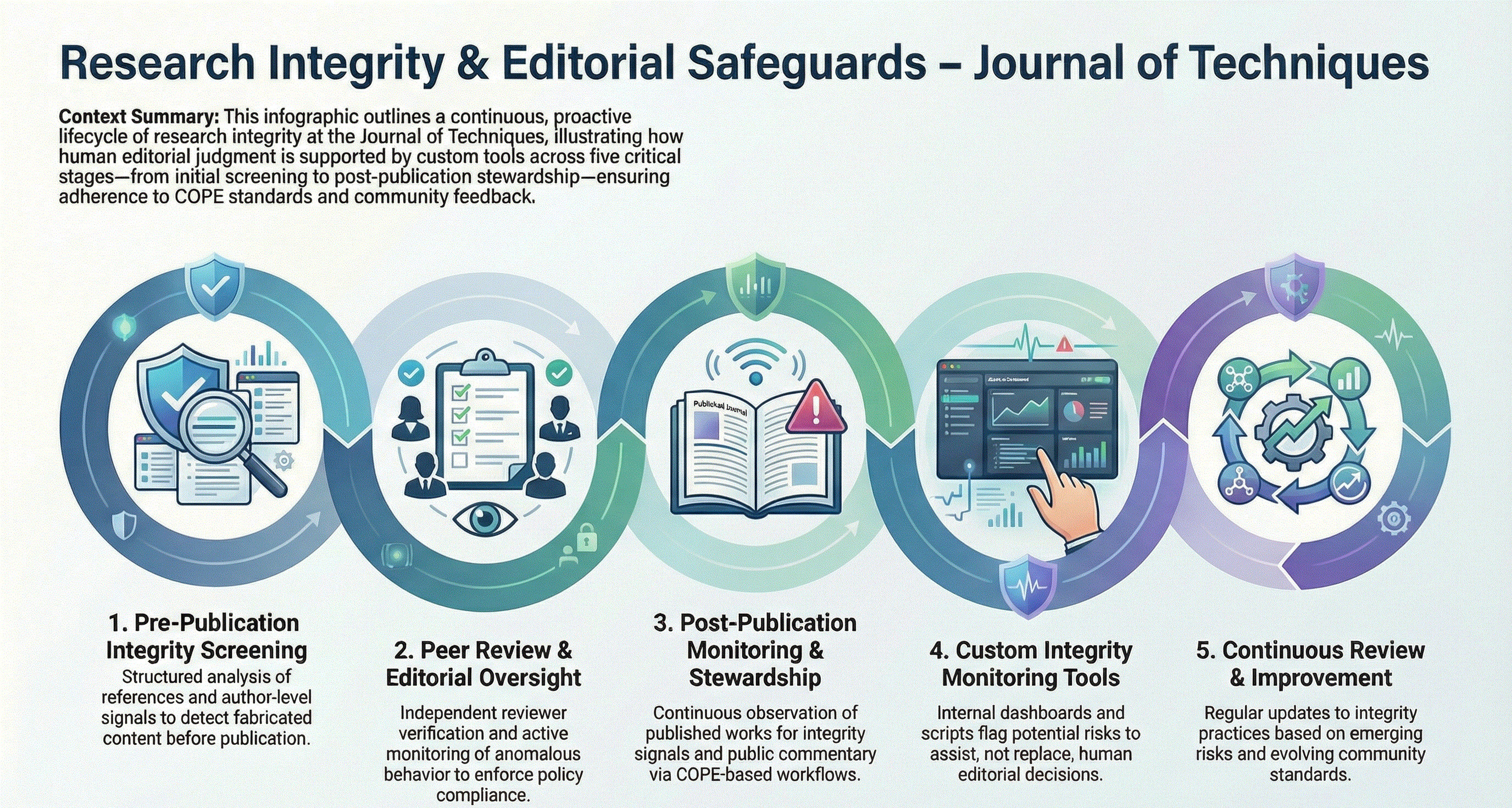
The Journal of Techniques is committed to maintaining the highest standards of research integrity, editorial independence, and publication ethics, in alignment with COPE Core Practices and international best practices in scholarly publishing.
Integrity assurance at the journal is treated as a continuous process, spanning pre-submission screening, peer review, publication, and post-publication stewardship.
All new submissions undergo structured integrity checks prior to and during peer review. These checks are designed to identify potential risks related to fabricated content, inappropriate citation practices, and undisclosed publication concerns.
These checks support editors in making informed decisions and do not replace expert peer review.
Guest-edited collections and special issues are subject to enhanced editorial oversight, recognizing their higher risk profile across the scholarly publishing ecosystem.
The Journal of Techniques recognizes its responsibility to safeguard the scholarly record after publication.
Where concerns arise, the journal follows established COPE workflows to ensure fair investigation, author engagement, and transparent outcomes.
To support these integrity processes, the journal has developed custom internal tools designed specifically for editorial use.
These systems are editorial support tools, not automated decision-makers. All final decisions remain with the journal’s editors, informed by expert judgment and established ethical guidelines.
The Journal of Techniques has designated a Research Integrity Officer (RIO) to provide independent oversight of the journal's ethical standards and integrity processes.
The Research Integrity Officer is responsible for:
The Research Integrity Officer operates independently of the editorial decision-making process to ensure impartiality.
Contact: [email protected]
Dr. Debashri RoyThe journal regularly reviews and updates its integrity practices in response to emerging risks, updated COPE guidance, and feedback from the scholarly community. By combining editorial expertise, transparent governance, and targeted technical support, the Journal of Techniques aims to proactively identify and address integrity risks before they impact the scholarly record or indexing status.
Journal Name: Journal of Techniques
ISSN: 2708-8383 (Online)
Publisher : Middle Technical University
Frequency : Quarterly
DOI : 10.51173/3/jt
Acceptance Rate : 27%
Journal Template : (Download)










Published By Middle Technical University (MTU) - Iraq
This journal is licensed under a Creative Commons Attribution 4.0 International (CC-BY 4.0)



A peer-reviewed, Scopus Indexed, no publication fees, open-access journal by the Middle Technical University, explore the journal.