
Enhancing Optimal Reactive Power Dispatch under Critical Contingencies Using MPC-GUPFC with FRT Capability and HPSOBAT Optimization
DOI:
https://doi.org/10.51173/jt.v7i3.2712Keywords:
Optimal Reactive Power Dispatch (ORPD), GUPFC, FRT, Model Predictive Control (MPC), HPSOBATAbstract
This paper presents a unified and intelligent scheme for enhancing Optimal Reactive Power Dispatch (ORPD) under severe grid disturbances in the IEEE 30-bus system. A critical branch outage is first identified using a composite performance index (PI) based on total power loss and total voltage variation. The most severe line removal introduces up to 10.0 MW of additional losses and a voltage deviation of 0.021 pu, significantly degrading system performance. To effectively counter this, a combined mitigation strategy is proposed, simultaneously applying a Fault Ride-Through (FRT) mechanism and a Model Predictive Control based Generalized Unified Power Flow Controller (MPC-GUPFC). The MPC-GUPFC is dynamically controlled over a 5-step prediction horizon and optimally placed at sensitive bus triplets using a sensitivity-driven placement framework. The FRT capability ensures system stability during the disturbance, while the MPC-GUPFC adaptively controls power flow and supports voltage during and after the faulty event. Quantitative results show that this coordinated FRT with MPC-GUPFC strategy reduces total power losses from 21.8 MW (post-outage without mitigation) to 12.2 MW, and worse-case voltage deviation from 0.136 pu to 0.060 pu, at a quantified MPC-GUPFC cost of $55,226.15. Moreover, reactive power losses are minimized from 16.9 MVAr to 9.5 MVAr, and the system converges in fewer than 10 iterations, compared to over 20 iterations in the unmitigated case. The overall PI value is improved by over 43.79 %, demonstrating the superiority of the proposed approach in improving voltage stability, loss minimization, and post-contingency recovery.
Downloads
References
M. H. Ali, A.M.A. Soliman, M. Abdeen, T. Kandil, A.Y. Abdelaziz, and A. El-Shahat, “A novel stochastic optimizer solving optimal reactive power dispatch problem considering renewable energy resources”, Energies 2023, 16, 1562. https://doi.org/10.3390/en16041562.
I.H. Shanono, A. Muhammad, N.R.H. Abdullah, H. Daniyal, and M.C. Tiong, “Optimal reactive power dispatch: a bibliometric analysis”, Journal of Electrical Systems and Inf Technol”, vol. 8, no. 1, pp. 1-23, 2021, https://doi.org/10.1186/s43067-020-00024-5.
I. Marouani, T. Guesmi, H.H. Abdallah, and A. Ouali, “Optimal reactive power dispatch considering FACTS devices”, Leonardo Journal of Sciences, vol. 10, no. 18, pp. 97-114, 2011.
K. H. Reddy, P.R. Reddy, and V. Ganesh, “Optimal allocation of FACTS devices using kinetic gas molecular optimization and grey wolf optimization for improving voltage stability”, Journal of Mechanics of Continua and Mathematical Sciences, vol. 15, no. 4, pp. 66-88, 2020, https://doi.org/10.26782/jmcms.2020.04.00007.
K. K. V. Kavuturu, K.N.V. Sai Tejaswi, and V. Janamala, “Performance and security enhancement using generalized optimal unified power flow controller under contingency conditions and renewable energy penetrations”, Journal of Electrical Systems and Inf Technol., vol. 9, no. 18, pp. 1-24, 2022, https://doi.org/10.1186/s43067-022-00057-y.
S. M. Abdelkader, E.F. Morgan, T.F. Megahed, W. Rohouma, and O. Abdel-Rahim, “A model predictive control strategy for enhancing fault ride through in PMSG wind turbines using SMES and improved GSC control”, Frontiers in Energy Research, vol. 11-2023, pp. 1-12, 2023, https://doi.org/10.3389/fenrg.2023.1277954.
J. Yuan, Y. Chen, N. Chen, Y. Zhang, and Y. Lin, “Research on low-voltage ride through control based on model predictive control”, J. Eng., 13, pp. 2114–2118, 2017, https://doi.org/10.1049/joe.2017.0703.
S. A. Adegoke, Y. Sun, and Z. Wang, “A mini review on optimal reactive power dispatch incorporating renewable energy sources and flexible alternating current transmission system”, Electr. Eng., 106, pp. 3961-3982, 2024, https://doi.org/10.1007/s00202-023-02199-2.
D. Das, Electrical Power Systems, New Age International (P) Ltd, New-Delhi. India, 2006.
J. J. Grainger, and W.D. Stevenson, Jr., Power System Analysis, Published by McGraw-Hill, Inc., Singapore, 1994.
J. A. Wood, B. F. Wollenberg, and G.B. Sheble, Power Generation, Operation, and Control, Third Edition, John Wiley & Sons, Inc., New York, 2014.
P. Kundur, Power system stability and control, Second Edition, John Wiley & Sons, Inc., New York, 1994.
X. Zhang, E. Handschin, and M. Yao, “Modeling of the generalized unified power flow controller (GUPFC) in a nonlinear interior point OPF”, IEEE Transactions on Power Systems, vol. 16, no. 3, pp. 367-373, 2001, https://doi.org/10.1109/59.932270.
R. R. Duvvuru, B. V. Prasanth, and V. Ganesh, “Performance of generalized unified power flow controller in transmission system” International Journal of Renewable Energy Technology, vol. 9, no. 1/2, pp. 108-117, 2018, https://doi.org/10.1504/IJRET.2018.090108.
K. K. V. Kavuturu, and P. V. R. L. Narasimham, “Optimal parameters of OUPFC and GUPFC under renewable energy power variation using Cuckoo search algorithm variants”, J. Electr. Eng. Technol., vol. 15, pp. 2079–2098, 2020, https://doi.org/10.1007/s42835-020-00501-x.
M. V. Rao, C. V. Suresh, and S. Sivanagaraju, “Generalized unified power flow controller for optimal reactive power dispatch by considering practical constraints”, Indian Journal of Science & Technology, vol. 10, no. 5, pp. 1-7, 2017, https://doi.org/10.17485/ijst/2017/v10i5/102937.
C. V. Suresh, and S. Sivangaraju, “Multi-objective optimal reactive power dispatch to maximize power system social welfare in the presence of generalized unified power flow controller”, Archives of Electrical Engineering, vol. 64, no. 3, pp. 405-426, 2015, https://doi.org/10.2478/aee-2015-0032.
K. R. Padiyar, and A. M. Kulkarni, “Control design and simulation of unified power flow controller”, IEEE Trans. Power Delivery, vol. 13, no. 4, pp. 1348–1354, 1998, https://doi.org/10.1109/61.714962.
J. Sun, H. Zheng, C. L. DeMarco, and Y. Chai, “Energy function-based model predictive control with UPFCs for relieving power system dynamic current violation”, IEEE Transactions on Smart Grid, vol. 7, no. 6, pp. 2933-2942, 2016, https://doi.org/10.1109/TSG.2016.2582878.
R. Sadiq, U. Naeem, and M. Shahzad, “Power system stabilization using unified power flow controller and model predictive control”, 2019 International Symposium on Recent Advances in Electrical Engineering (RAEE), Islamabad, Pakistan, pp. 1-6, 2019, https://doi.org/10.1109/RAEE.2019.8887022.
A. N. B. Alsammak, and H. Adnan, “Power quality improvement using fuzzy logic controller based unified power flow controller”, Indonesian Journal of Electrical Engineering and Computer Science, vol. 21, no. 1, pp. 1-9, 2021, https://doi.org/10.11591/ijeecs.v21.i1.pp1-9.
S. Ghaedi, S. Abazari, and G. A. Markadeh, “Transient stability improvement of power system with UPFC control by using transient energy function and sliding mode observer based on locally measurable information”, Measurement, 183, 109842, 2021, https://doi.org/10.1016/j.measurement.2021.109842.
S. Tiwari, R. Naresh, and R. Jha, “Neural network predictive control of UPFC for improving transient stability performance of power system”, Applied Soft Computing, vol. 11, no. 8, pp. 4581-4590, 2011, https://doi.org/10.1016/j.asoc.2011.08.003.
L. H. Hassan, M. Moghavvemi, H. A. F. Almurib, and O. Steinmayer, “Application of genetic algorithm in optimization of unified power flow controller parameters and its location in the power system network”, International Journal of Electrical Power & Energy Systems, 46, pp. 89-97, 2013, https://doi.org/10.1016/j.ijepes.2012.10.011.
P. M. S. Carvalho, P. F. Correia and L. A. F. M. Ferreira, "distributed reactive power generation control for voltage rise mitigation in distribution networks," IEEE Transactions on Power Systems, vol. 23, no. 2, pp. 766-772, May 2008, https://doi.org/10.1109/TPWRS.2008.919203.
S. Mirza and A. Hussain, “New Approaches in finite control model predictive control for grid-connected Photovoltaic inverters: State of the Art”, Solar, vol. 4, no. 3, pp. 491-508, 2024, https://doi.org/10.3390/solar4030023.
B. Bhattacharyya, V. K. Gupta, and S. Kumar, “UPFC with series and shunt FACTS controllers for the economic operation of a power system”, Ain Shams Engineering Journal, vol. 5, no. 3, pp. 775-787, 2014, http://dx.doi.org/10.1016/j.asej.2014.03.013.
S. S. Padaiyatchi, and S. Jaya, “Hybrid Bat optimization algorithm applied to optimal reactive power dispatch problems”, International Journal of Electrical and Electronics Engineering, vol. 9, no. 1, pp. 1-9, 2022, https://doi.org/10.14445/23488379/IJEEE-V9I1P101.
M. Ellahi, G. Abbas, G. B. Satrya, M. R. Usman, and J. Gu, “A modified hybrid particle swarm optimization with bat algorithm parameter inspired acceleration coefficients for solving eco-friendly and economic dispatch problems”, IEEE Access, 9, pp. 82169-82187, 2021, https://doi.org/10.1109/ACCESS.2021.3085819.
S. Mugemanyi, Z. Qu, F.X. Rugema, Y. Dong, C. Bananeza, and L. Wang, “Optimal reactive power dispatch using chaotic bat algorithm”, IEEE Access, 8, pp. 65830- 65867, 2020, https://doi.org/10.1109/ACCESS.2020.2982988
S.O. Adetona, M. John, and S. Umar, “Optimal reactive power dispatch using improved chaotic PSO algorithm with the wingbeat frequency", Acta Marisiensis. Seria Technologica, vol. 19 (XXXVI), no. 2, pp. 20-29, 2022, https://doi.org/10.2478/amset-2022-0013
MathWorks, Inc., 2024, MATLAB (Version R2024b) [Software][Online]. Available: https://www.mathworks.com
R. D. Zimmerman, C. E. Murillo-Sánchez, and R. J. Thomas, “MATPOWER: Steady-state operations, planning, and analysis tools for power systems research and education”, IEEE Trans. on Power Systems, vol. 26, no. 1, pp. 12-19, 2011, https://doi.org/10.1109/TPWRS.2010.2051168.
University of Washington, “Power systems test case archive”, 1999 [Online]. Available: https://labs.ece.uw.edu/pstca/pf30/pg_tca30bus.htm.
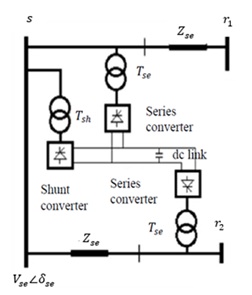
Downloads
Published
How to Cite
Issue
Section
License
Copyright (c) 2025 Sunday Adetona, Adeola Balogun, Frank Okafor

This work is licensed under a Creative Commons Attribution 4.0 International License.