Precision Medicine Approaches in Renal Cell Carcinoma: Integrating MultiOmics Data for Personalized Therapeutic Strategies
DOI:
https://doi.org/10.51173/jt.v7i4.2760Keywords:
Precision Medicine, Renal Cell Carcinoma, Multi-Omics, Machine Learning, Computational OncologyAbstract
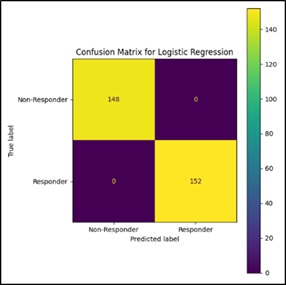
The inherent heterogeneity of Renal Cell Carcinoma (RCC) is a major obstacle to its treatment which necessitates the implementation of precision medicine approaches. The presented work introduces a full-scale computational model for quantitative modeling and evaluation of therapy plans by means of multi-omics data integration. A scaled synthetic dataset of 1,200 RCC patients was generated, including clinical information, gene expression data, and patient somatic mutation data, which carry intrinsic molecular signals of simulated treatment efficacy and patient survival. In order to predict treatment response, trained three machine learning models: Logistic Regression (accuracy, the Random Forest (accuracy and the Gradient Boosting (area under the curve (AUC)). All models achieved an ideal value of 1.00. This validated their good ability to determine molecular drivers and they ran a good analysis using Random Forest feature importance analysis to determine the important genes affecting their prediction. Treatment efficacy was therapeutically relevant, showing a highly significant difference in prognosis between Non-Responders and Responders (p<0.005) as shown by the survival comparison analysis based on Kaplan-Meier curves and using a Log-rank test. Multi-omics characteristics were also tested to be prognostically independent of survival in a Cox Proportional Hazards model. Unsupervised K-Means clustering has revealed that various groups of patients existed and that UMAP visualization showed an excellent level of agreement with such molecular groupings and response to treatment. This article demonstrates a successful proof of principle of an integrative computational approach that is able to accurately predict the outcome of a treatment protocol, discover important biomarkers and characterize a population into physiologically meaningful subpopulations. These findings demonstrate the tremendous potential of the multi-omics model to improve patient care for individuals with renal cell carcinoma.
Downloads
References
C. Delrue and M. M. Speeckaert, "Decoding Kidney Pathophysiology: Omics-Driven Approaches in Precision Medicine," (in eng), J Pers Med, vol. 14, no. 12, Dec 19 2024, doi: 10.3390/jpm14121157.
H. Yan, X. Ji, and B. Li, "Advancing personalized, predictive, and preventive medicine in bladder cancer: a multi-omics and machine learning approach for novel prognostic modeling, immune profiling, and therapeutic target discovery," (in English), Frontiers in Immunology, Original Research vol. Volume 16 - 2025, 2025-April-22 2025, doi: 10.3389/fimmu.2025.1572034.
S. Qahtan, K. Yatim, M. H. Osman, H. Zulzalil, M. Luqman, and M. L. Mahamad Zakaria, "A Decision Cloud Ranking Approach Based on Privacy and Security in Blockchain E- Health Industry 4.0 Systems," Journal of Techniques, vol. 5, no. 4, pp. 1-15, 12/31 2023, doi: 10.51173/jt.v5i4.1464.
R. Correa-Aguila, N. Alonso-Pupo, and E. W. Hernández-Rodríguez, "Multi-omics data integration approaches for precision oncology," (in eng), Mol Omics, vol. 18, no. 6, pp. 469-479, Jul 11 2022, doi: 10.1039/d1mo00411e.
D. Acharya and A. Mukhopadhyay, "A comprehensive review of machine learning techniques for multi-omics data integration: challenges and applications in precision oncology," (in eng), Brief Funct Genomics, vol. 23, no. 5, pp. 549-560, Sep 27 2024, doi: 10.1093/bfgp/elae013.
F. Valenti et al., "Precision Medicine and Melanoma: Multi-Omics Approaches to Monitoring the Immunotherapy Response," (in eng), Int J Mol Sci, vol. 22, no. 8, Apr 7 2021, doi: 10.3390/ijms22083837.
H. Ali, "Artificial intelligence in multi-omics data integration: Advancing precision medicine, biomarker discovery and genomic-driven disease interventions," International Journal of Science and Research Archive, vol. 08, no. 01, pp. 1012-1030, 02/21 2023, doi: 10.30574/ijsra.2023.8.1.0189.
Z. Ahmed, "Multi-omics strategies for personalized and predictive medicine: past, current, and future translational opportunities," (in eng), Emerg Top Life Sci, vol. 6, no. 2, pp. 215-225, Apr 15 2022, doi: 10.1042/etls20210244.
X. Ruan et al., "Integrative analysis of single-cell and bulk multi-omics data to reveal subtype-specific characteristics and therapeutic strategies in clear cell renal cell carcinoma patients," (in eng), J Cancer, vol. 15, no. 19, pp. 6420-6433, 2024, doi: 10.7150/jca.101451.
R. Sura Salah, G. Ismail Hadi, and A. Hapini, "Disease Diagnosis Using Hierarchical Algorithm and Request Preference Technique Based on Solution Similarity," Journal of Techniques, vol. 5, no. 2, pp. 233-239, 06/30 2023, doi: 10.51173/jt.v5i2.1086.
R. Sharma, G. Kannourakis, P. Prithviraj, and N. Ahmed, "Precision Medicine: An Optimal Approach to Patient Care in Renal Cell Carcinoma," (in eng), Front Med (Lausanne), vol. 9, p. 766869, 2022, doi: 10.3389/fmed.2022.766869.
F. Bismark Atta, B. Cláudia, and A. A.-A. Raed, "The Impact of the Internet of Things (IoT) on Healthcare Delivery: A Systematic Literature Review," Journal of Techniques, vol. 5, no. 3, pp. 84-91, 09/30 2023, doi: 10.51173/jt.v5i3.1433.
F. Gavi et al., "Multiomics in Renal Cell Carcinoma: Current Landscape and Future Directions for Precision Medicine," (in eng), Curr Urol Rep, vol. 26, no. 1, p. 44, May 26 2025, doi: 10.1007/s11934-025-01276-2.
G. Molla and M. Bitew, "Revolutionizing Personalized Medicine: Synergy with Multi-Omics Data Generation, Main Hurdles, and Future Perspectives," (in eng), Biomedicines, vol. 12, no. 12, Nov 30 2024, doi: 10.3390/biomedicines12122750.
J. Liu, Y. Shi, and Y. Zhang, "Multi-omics identification of an immunogenic cell death-related signature for clear cell renal cell carcinoma in the context of 3P medicine and based on a 101-combination machine learning computational framework," (in eng), Epma j, vol. 14, no. 2, pp. 275-305, Jun 2023, doi: 10.1007/s13167-023-00327-3.
A. Zaravinos, "Unveiling the Future of Oncology and Precision Medicine through Data Science," (in eng), Int J Mol Sci, vol. 25, no. 11, May 26 2024, doi: 10.3390/ijms25115797.
C. C. Chen, P. Y. Chu, and H. Y. Lin, "Supervised Learning and Multi-Omics Integration Reveals Clinical Significance of Inner Membrane Mitochondrial Protein (IMMT) in Prognostic Prediction, Tumor Immune Microenvironment and Precision Medicine for Kidney Renal Clear Cell Carcinoma," (in eng), Int J Mol Sci, vol. 24, no. 10, May 15 2023, doi: 10.3390/ijms24108807.
A. Inas Nazeeh, A.-t. Usama Salman, H. A. A.-H. hassan, and D. Abbas Thamer, "Correlation between Neutrophil Gelatinase Associated with Lipocaline and Beta-2 Microglobulin with Other Renal Markers in Iraqi Patients with Multiple Myeloma," Journal of Techniques, vol. 4, no. Special Issue, pp. 101-104, 11/15 2022, doi: 10.51173/jt.v4i33.679.
S. Nabaa Wisam, R. Buthaina Ateyah, S. Raheem Saber, and H. M. Azad, "Assessment of Risk Factors of Chronic Kidney Disease among Patients Attending Medical City Complex," Journal of Techniques, vol. 5, no. 2, pp. 147-154, 06/30 2023, doi: 10.51173/jt.v5i2.885.
V. Raufaste-Cazavieille, R. Santiago, and A. Droit, "Multi-omics analysis: Paving the path toward achieving precision medicine in cancer treatment and immuno-oncology," (in eng), Front Mol Biosci, vol. 9, p. 962743, 2022, doi: 10.3389/fmolb.2022.962743.
C. Hu and W. Jia, "Multi-omics profiling: the way towards precision medicine in metabolic diseases," (in eng), J Mol Cell Biol, vol. 13, no. 8, pp. 576-93, Aug 18 2021, doi: 10.1093/jmcb/mjab051.
Downloads
Published
How to Cite
Issue
Section
License
Copyright (c) 2025 Alhamza Abdulsatar Shaker

This work is licensed under a Creative Commons Attribution 4.0 International License.