Optimization of the Adsorption of Cadmium and Copper Ions from an Aqueous Solution by Alum Sludge
DOI:
https://doi.org/10.51173/jt.v7i4.2720Keywords:
Water Treatment Sludge, Alum Sludge, Adsorption Isotherms, Kinetics, Box-Behnken DesignAbstract
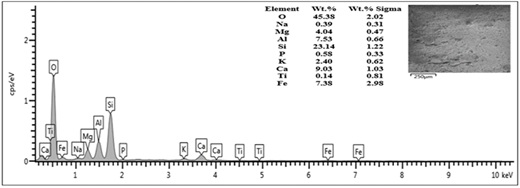
This work aims to reuse waste from drinking water treatment plants that use alum, called alum sludge (AS). By calcining alum sludge (CAS) at 550 °C for two hours, then using it to adsorb the heavy metals copper and cadmium from their aqueous solutions with the batch adsorption method. The ability of CAS to remove Cd (II) and Cu (II) was studied under the influence of several factors (i.e., initial concentration of metal ions, contact time and CAS dosage) by using Box-Behnken experimental designs (BBD) for the response surface methodology (RSM) and with statistical analysis (ANOVA). Then, identify the optimal conditions that produce the maximum removal. The AS, which has been dried and ground was characterized by chemical method analysis (SEM, XRD, and EDX). At optimum conditions, the maximum removal percentages of Cu and Cd reached 92.5% and 98.8%, respectively. The adsorption isotherms for Cu data followed the Langmuir model, while the Cd data fitted well with the Freundlich and the Langmuir models. For each Cd (II) and Cu (II), the maximum monolayer adsorption capacity was 29.101 and12.45 mg/g, respectively. The pseudo-second-order kinetic model provided a good match to the kinetic data. It was found that water treatment sludge is a good source from which to create an inexpensive adsorbent to remove heavy metal ions from wastewater.
Downloads
References
Zhang, P., Yang, M., Lan, J., Huang, Y., Zhang, J., Huang, S., Yang, Y., Ru, J., Water Quality Degradation Due to Heavy Metal Contamination: Health Impacts and Eco-Friendly Approaches for Heavy Metal Remediation”, Toxics, vol. 5, no 1, pp 114-121, Apr. 2023, https://doi.org/10.3390/toxics11100828.
Al-Sharifi, A.A.H., Possible contamination with heavy elements and some ecological parameters of water Bani- Hassan stream in the province of Karbala- Iraq. Master thesis in Education in Biology / Botany, university of Baghdad - Ibn – ALHaitham, 2014.
A. W. Butu and E. O. Iguisi, "Concentration of metal pollutants in River Kubanni, Zaria, Nigeria," Res. J. Environ. Earth Sci., vol. 4, no. 12, pp. 1085–1089, 2012.
W. M. Aboud, Z. F. Ali, F. Sh. Abbas, A. T. Yassin, and M. S. Salman, “Variations Heavy Metals Concentrations in Tigris River in Baghdad City,” Iraqi Journal of Market Research and Consumer Protection, vol. 7, no. 2, pp. 14–31, Nov. 9, 2015.
I. H. Ahmed, T. F. Al‑Murshedi, R. A. M. Jawad, and A. K. Hashim, "Experiment of treating polluted wastewater resulting from petroleum refineries using pyramid solar still distillation system to eliminate hydrocarbon toxicity," Desalination and Water Treatment, vol. 313, pp. 106–115, 2023, doi: 10.5004/dwt.2023.30076.
S. M. H. Abbas and A. S. Amini, "Investigating the changes of dissolved substances in water using remote sensing (Case Study: Al‑Gharraf River)," J. Techniques, vol. 7, pp. 66–79, 2025.
M. A. Renu and K. Singh, "Heavy metal removal from wastewater using various adsorbents: A review," J. Water Reuse Desalination, vol. 7, pp. 387–419, 2017, doi: 10.2166/wrd.2016.104.
M. J. A. Alatabe and M. A. R. Hameed, "Exfoliate apricot kernels, natural low-cost bio-sorbent for rapid and efficient adsorption of CN⁻ ions from aqueous solutions: Isotherm, kinetic and thermodynamic models," Int. J. Appl. Sci. Eng., vol. 18, no. 5, pp. 1–11, 2021, doi: 10.6703/IJASE.202109_18(5).003.
T. S. Anirudhan and S. S. Sreekumari, "Adsorptive removal of heavy metal ions from industrial effluents using activated carbon derived from waste coconut buttons," J. Environ. Sci., vol. 23, pp. 1989–1998, 2011, doi: 10.1016/S1001-0742(10)60515-3.
A. Gopalakrishnan, R. Krishnan, S. Thangavel, G. Venugopal, and S. J. Kim, "Removal of heavy metal ions from pharm effluents using graphene-oxide nanosorbents and study of their adsorption kinetics," J. Ind. Eng. Chem., vol. 30, pp. 14–19, 2015, doi: 10.1016/j.jiec.2015.06.005.
N. A. Oladoja, I. A. Ololade, O. A. Alimi, T. A. Akinnifesi, and G. A. Olaremu, "Iron incorporated rice husk silica as a sorbent for hexavalent chromium attenuation in aqueous system," Chem. Eng. Res. Des., vol. 91, pp. 2691–2702, 2013, doi: 10.1016/j.cherd.2013.03.001.
H. Daraei, A. Mittal, M. Noorisepehr, and J. Mittal, "Separation of chromium from water samples using eggshell powder as a low-cost sorbent: kinetic and thermodynamic studies," Desalination Water Treat., vol. 53, pp. 214–220, 2015, doi: 10.1080/19443994.2013.837011.
S. T. Hussain and S. A. Khaleefa, "Removal of heavy metal by ion exchange using bentonite clay," J. Ecol. Eng., vol. 22, no. 1, pp. 104–111, 2021, doi: 10.12911/22998993/128865.
A. Tripathi and M. R. Ranjan, "Heavy metal removal from wastewater using low cost adsorbents," J. Bioremed. Biodegrad., vol. 6, p. 315, 2015, doi: 10.4172/2155-6199.1000315..
H. Sun, N. Xia, Z. Liu, F. Kong, and S. Wang, "Removal of copper and cadmium ions from alkaline solutions using chitosan-tannin functional paper materials as adsorbent," Natl. Libr. Med., vol. 236, p. 124370, 2019.
R. R. Merchant and Z. Z. Painter, "Study of removal of heavy metals from waste water by adsorption," Int. J. Appl. Eng. Res., vol. 14, 2019.
J. Kluczka, M. Zołotajkin, J. Ciba, and M. Staroń, "Assessment of aluminum bioavailability in alum sludge for agricultural utilization," Environ. Monit. Assess., vol. 189, no. 8, p. 422, 2017, doi: 10.1007/s10661-017-6133-x.
M. N. Rashed, M. A. El-Daim El Taher, and S. M. M. Fadlalla, "Adsorption of methylene blue using modified adsorbents from drinking water treatment sludge," Water Sci. Technol., vol. 74, no. 8, pp. 1885–1898, 2016, doi: 10.2166/wst.2016.377.
Z. T. Mushtaq, A. A. Farhan, and T. H. Abood, "Removal of Vat-Orange dye from textile factory wastewater by Zeolite X produced from alum sludge," AIP Conf. Proc., vol. 2660, p. 020081, 2022, doi: 10.1063/5.0107976.
N. Muisa, I. Nhapi, W. Ruziwa, and M. M. Manyuchi, "Utilization of alum sludge as adsorbent for phosphorus removal in municipal wastewater: A review," J. Water Process Eng., vol. 35, p. 101187, 2020, doi: 10.1016/j.jwpe.2020.101187.
M. Pająk, "Alum sludge as an adsorbent for inorganic and organic pollutants removal from aqueous solutions: a review," Int. J. Environ. Sci. Technol., vol. 20, pp. 10953–10972, 2023, doi: 10.1007/s13762-023-04854-4.
D. Krishna, G. S. Kumar, and D. R. P. Raju, "Performance comparison of individual adsorbents and mixed adsorbent for the removal of copper (II) from waste water," Int. J. Appl. Sci. Eng., vol. 18, p. 2019135, 2021, doi: 10.6703/IJASE.202103_18(1).010.
H. E. Mgbemere, I. C. Ekpe, and G. I. Lawal, "Zeolite synthesis, characterization and application areas: a review," Int. Res. J. Environ. Sci., vol. 6, no. 10, pp. 45–59, Oct. 2017.
A. Rozhkovskaya, J. Rajapakse, and G. J. Millar, "Optimisation of zeolite LTA synthesis from alum sludge and the influence of the sludge source," J. Environ. Sci., vol. 99, pp. 130–142, 2021, doi: 10.1016/j.jes.2020.06.019.
R. Machado, S. F. Valle, I. R. S. Chao, and C. Ribeiro, "Valorization of alum sludge waste through zeolite synthesis for sustainable fertilizer production," Mater. Res., vol. 27, p. e20240269, 2024, doi: 10.1590/1980-5373-mr-2024-0269.
M. K. Uddin, "A review on the adsorption of heavy metals by clay minerals, with special focus on the past decade," Chem. Eng. J., vol. 308, pp. 438–462, Jan. 2017, doi: 10.1016/j.cej.2016.09.029.
World Health Organization, Guidelines for Drinking‑Water Quality, 4th ed., Geneva, Switzerland: World Health Organization, 2011, ISBN: 978‑92‑4‑154815‑1.
P. Castaldi, M. Silvetti, G. Garau, D. Demurtas, and S. A. Deiana, "Copper(II) and lead(II) removal from aqueous solution by water treatment residues," J. Hazard. Mater., vol. 283, pp. 140–147, Feb. 2015, doi: 10.1016/j.jhazmat.2014.09.019.
X. Du, S. Cui, X. Fang, Q. Wang, and G. Liu, "Adsorption of Cd(II), Cu(II), and Zn(II) by granules prepared using sludge from a drinking water purification plant," J. Environ. Chem. Eng., vol. 8, no. 6, p. 104530, Dec. 2020, doi: 10.1016/j.jece.2020.104530.
E. Elkhatib, A. Mahdy, F. Sherif, and W. Elshemy, "Competitive adsorption of cadmium (II) from aqueous solutions onto nanoparticles of water treatment residual," J. Nanomater., vol. 2016, Article ID 8496798, 2016, doi: 10.1155/2016/8496798.
J. Bayuo, M. J. Rwiza, M. Sillanpää, and K. M. Mtei, "Removal of heavy metals from binary and multicomponent adsorption systems using various adsorbents – a systematic review," RSC Adv., vol. 13, pp. 13052–13093, 2023, doi: 10.1039/D3RA01660A.
B. B. Kefi, I. Bouchmila, S. Koumba, P. Martin, and N. M'Hamdi, "Kinetics, isotherms, and thermodynamic studies of Cu (II) adsorption on titanium oxide nanotubes," Mediterr. J. Chem., vol. 12, pp. 19–30, 2022. [Online]. Available: https://www.medjchem.com/index.php/medjchem/article/view/1622.
D. C. Montgomery, Design and Analysis of Experiments, 8th ed., Hoboken, NJ, USA: John Wiley & Sons, Inc., 2012. ISBN: 978-1118146927.
W.-Q. Zuo, C. Chen, H.-J. Cui, and M.-L. Fu, "Enhanced removal of Cd(II) from aqueous solution using CaCO₃ nanoparticle modified sewage sludge biochar," RSC Adv., vol. 7, no. 26, pp. 16238–16243, 2017, (https://doi.org/10.1039/C7RA00324B).
S. Wierzba, J. Makuchowska-Fryc, A. Kłos, Z. Ziembik, and W. Ochędzan-Siodłak, "Role of calcium carbonate in the process of heavy metal biosorption from solutions: synergy of metal removal mechanisms," Sci. Rep., vol. 12, no. 1, p. 17668, 2022, doi: 10.1038/s41598-022-22603-4.
F. Mukarrom, Pranoto, R. Karsidi, E. Gravitiani, F. Astuti, and W. Maharditya, "The assessment of claystone, quartz and coconut shell charcoal for adsorbing heavy metals ions in acid mine drainage," IOP Conf. Ser. Mater. Sci. Eng., vol. 858, p. 012040, 2020, (https://doi.org/10.1088/1757-899X/858/1/012040).
T. Abdullahi, Z. Harun, and M. H. D. Othman, "A review on sustainable synthesis of zeolite from kaolinite resources via hydrothermal process," Adv. Powder Technol., vol. 28, no. 8, pp. 1827–1840, 2017, doi: (https://doi.org/10.1016/j.apt.2017.04.028).
B. Wang, Q. Bao, Z. Chen, X. Qiao, Y. Hu, J. Zhang, D. Liang, P. Sun, H. Xia, and X. Wang, "K-RHO zeolite with high nitrogen selectivity for N₂/CH₄ separation by PSA process," Separation and Purification Technology, vol. 338, p. 126586, 2024, (https://doi.org/10.1016/j.seppur.2024.126586).
M. A. Tony, "Zeolite‑based adsorbent from alum sludge residue for textile wastewater treatment," International Journal of Environmental Science and Technology, vol. 17, pp. 2485–2498, 2020, doi: 10.1007/s13762-019-02511-9.
M. P. Kumar, K. V. Kumar, and V. Kumar, "Response Surface Methodology - A Review," IJSRD - International Journal for Scientific Research & Development, vol. 7, pp. 558–565, 2020.
A. O. Dada, A. P. Olalekan, A. M. Olatunya, and O. Dada, "Langmuir, Freundlich, Temkin and Dubinin-Radushkevich isotherms studies of equilibrium sorption of Zn2+ unto phosphoric acid modified rice husk," Journal of Applied Chemistry, vol. 3, pp. 38-45, 2012.
A. A. Farhan, A. H. Ismail, and B. Sh. Abed, "Applying Box–Behnken design with statistical optimization for removal of vat orange dye from aqueous solution using kaolin," Journal of Engineering Science and Technology, vol. 16, pp. 1588–1600, 2021.
J. Li, X. Dong, X. Liu, X. Xin, W. Duan, J. Park, L. Gao, and Y. Lu, "Comparative study on the adsorption characteristics of heavy metal ions by activated carbon and selected natural adsorbents," Sustainability, vol. 14, p. 15579, 2022. https://doi.org/10.3390/su142315579.
A. Abdullah, A. K. Moonis, B. H. Hameed, A. A. Ayoub, R. S. Masoom, A. A. Zeid, and A. B. H. Yacine, "Mercerized mesoporous date pit activated carbon—A novel adsorbent to sequester potentially toxic divalent heavy metals from water," PLOS ONE, vol. 12, p. e0184493, 2017. https://doi.org/10.1371/journal.pone.0184493.
E. C. Lima, M. A. Adebayo, and F. M. Machado, "Kinetic and equilibrium models of adsorption," in Carbon Nanomaterials as Adsorbents for Environmental and Biological Applications, pp. 33–69, 2015.
S. Nasseri, A. Yagubov, A. Alemi, and A. Nuriev, "Optimization of copper and zinc ions removal from aqueous solution by modified nano-bentonite using response surface methodology," Journal of Ultrafine Grained and Nanostructured Materials, vol. 53, pp. 78–90, 2020.
A. Es-Said, H. Nafai, L. El Hamdaoui, A. Bouhaouss, and R. Bchitou, "Adsorptivity and selectivity of heavy metals Cd(II), Cu(II), and Zn(II) toward phosphogypsum," Desalination and Water Treatment, vol. 197, pp. 291–299, 2020, doi: 10.5004/dwt.2020.25964.
E. Ajenifuja, J. A. Ajao, and E. O. B. Ajayi, "Adsorption isotherm studies of Cu(II) and Co(II) in high concentration aqueous solutions on photocatalytically modified diatomaceous ceramic adsorbents," Applied Water Science, vol. 7, pp. 3793–3801, 2017, doi: 10.1007/s13201-017-0527-3.
H. Nadaroglu, E. Kalkan, and N. Demir, "Removal of copper from aqueous solution using red mud," Desalination, vol. 251, pp. 90–95, 2010, doi: 10.1016/j.desal.2009.09.138.
A. Ali, S. Ahmad, and A. Ashfaq, "Kinetics and isotherm studies for evaluating adsorption capacity of ceramic pottery waste for the removal of Cu(II) in aqueous system," International Journal of Advanced Technology in Engineering and Science (IJATES), vol. 4, no. 12, 2016.
Z. Danková, A. Bekényiová, I. Štyriaková, and E. Fedorová, "Study of Cu(II) adsorption by siderite and kaolin," Procedia Earth and Planetary Science, vol. 15, pp. 821–826, 2015, doi: 10.1016/j.proeps.2015.08.131.
H. A. S. Alhaithloul, I. M. Alsudays, E. G. Zaki, S. M. Elsaeed, A. E. Mubark, L. Salib, G. Safwat, G. Niedbała, A. Diab, M. A. Abdein, A. Alharthi, S. A. Zakai, and A. Elkelish, “Retrieval of Cu²⁺ and Cd²⁺ ions from aqueous solutions using sustainable guar gum/PVA/montmorillonite nanocomposite films: effect of temperature and adsorption isotherms,” Frontiers in Chemistry, vol. 12, no., Article 1393791, Aug. 5, 2024. doi: 10.3389/fchem.2024.1393791.
J. D. C. Izidoro, D. A. Fungaro, J. E. Abbott, and S. Wang, "Synthesis of zeolites X and A from fly ashes for cadmium and zinc removal from aqueous solutions in single and binary ion systems," Fuel, vol. 103, pp. 827–834, 2013, doi: 10.1016/j.fuel.2012.08.030.
M. Hamidpour, M. Afyuni, M. Kalbasi, A. H. Khoshgoftarmanes, and V. J. Inglezakis, "Mobility and plant-availability of Cd(II) and Pb(II) adsorbed on zeolite and bentonite," Applied Clay Science, vol. 48, pp. 342–348, 2010, doi: 10.1016/j.clay.2010.07.004.
T. A. Salah, A. M. Mohammad, M. A. Hassan, and B. E. El-Anadouli, "Development of nano-hydroxyapatite/chitosan composite for cadmium ions removal in wastewater treatment," Journal of the Taiwan Institute of Chemical Engineers, vol. 45, pp. 1571–1577, 2014, doi: 10.1016/j.jtice.2014.04.004.
T. M. Alslaibi, I. Abustan, M. A. Ahmad, and A. A. Foul, "Cadmium removal from aqueous solution using microwaved olive stone activated carbon," Journal of Environmental Chemical Engineering, vol. 1, no. 4, pp. 589–599, 2013, doi: 10.1016/j.jece.2013.06.003.
J. H. Park, J. H. Eom, S. L. Lee, S. W. Hwang, S. H. Kim, S. W. Kang, J. J. Yun, J. S. Choi, Y. H. Lee, and D. C. Seo, "Exploration of the potential capacity of fly ash and bottom ash derived from wood pellet-based thermal power plant for heavy metal removal," Science of the Total Environment, vol. 740, p. 140205, 2020, doi: 10.1016/j.scitotenv.2020.140205.
S. S. Gupta and K. G. Bhattacharyya, "Immobilization of Pb(II), Cd(II) and Ni(II) ions on kaolinite and montmorillonite surfaces from aqueous medium," Journal of Environmental Management, vol. 87, pp. 46–58, 2008, doi: 10.1016/j.jenvman.2007.01.048.
Downloads
Published
How to Cite
Issue
Section
License
Copyright (c) 2025 Ayat Khairi Hashim

This work is licensed under a Creative Commons Attribution 4.0 International License.